

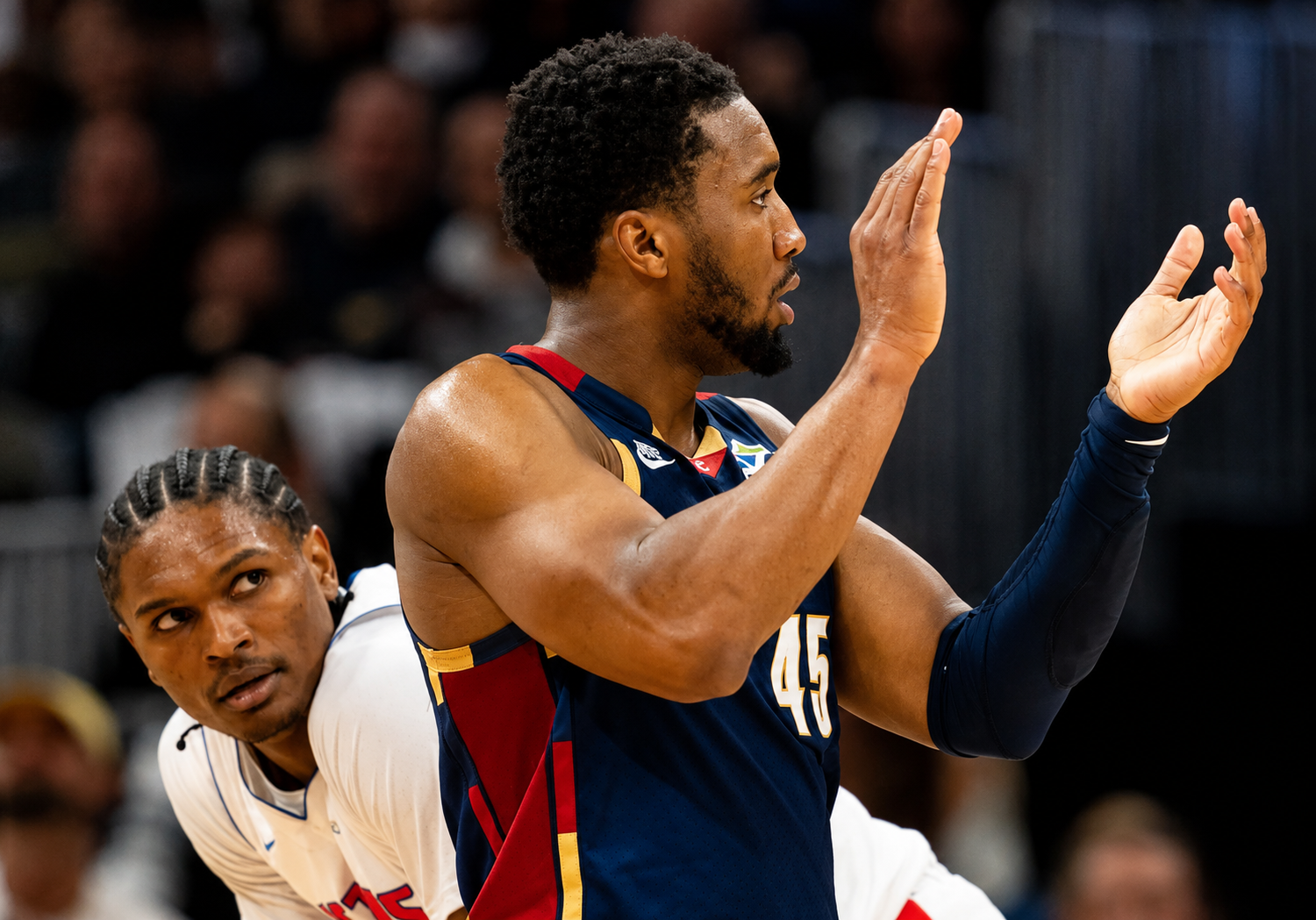
With 7 minutes and 52 seconds left in Game 1 of the Eastern Conference Finals, the Cleveland Cavaliers were ahead 93-71 at Madison Square Garden, in a building where they were supposed to be the visiting team getting drowned out by one of the loudest crowds in professional sports.
Instead they had spent three quarters making the Knicks look like a team that had not played a basketball game in eleven days, which of course was exactly what they were, and Cleveland was playing with the kind of authority that tends to settle things before the final act begins.
What happened after that will be studied and debated in Cleveland for a long time.
The Knicks went on a 44-11 run over the final 7 minutes and 40 seconds of regulation and overtime combined.
The Cavaliers, who had been in complete control of the game and of the series narrative, suddenly could not make a shot, could not get a stop, could not slow down a Jalen Brunson who had spent most of the night being held in check and then decided the fourth quarter was his.
By the time it was over, the Cavaliers had lost 115-104 in overtime after leading by 22 and the building that should have been hostile territory was shaking the walls in a way that only happens when something genuinely historic has taken place.
NBA Communications confirmed the historical weight of it the following morning. The Knicks’ fourth-quarter comeback was the largest in a Conference Finals game since 1997, a span of 29 years.
The only larger fourth-quarter comeback in any NBA playoff game since the league began tracking play-by-play data is the LA Clippers’ 24-point rally against the Memphis Grizzlies in 2012, a game that still ranks among the most improbable results in postseason history.
Cleveland’s blown lead was not the all-time record. It was something close enough to it in the specific context of the conference finals that the distinction barely matters when you are the team that gave it away.
Cavaliers owner Dan Gilbert took to X that night. “Hard to find anything good to say about blowing a 22-point lead in the fourth quarter on the road in the ECF,” he wrote, before adding that the team had proven it could bounce back.
He was trying to be encouraging. He was not wrong that one game does not end a seven-game series. He was also putting on record the kind of admission that franchise owners do not usually make publicly, because there genuinely was nothing good to say about it.
Then came Game 2 and the story got significantly worse.
What the Numbers Across Both Games Are Actually Saying
To understand what is happening to the Cleveland Cavaliers in this series you have to look at the numbers from both games together rather than as separate events, because the combined picture is the one that tells the real story about where this team is psychologically right now.
In Game 1, Donovan Mitchell scored his last basket with 8 minutes and 19 seconds remaining in the fourth quarter.
Before that moment he had been magnificent, posting 29 points and a career-high six steals, carrying Cleveland through a game that should not have been as comfortable as it was given that the Knicks were playing at home coming off a week of rest.
After that moment, he did not score again. Not in the final eight minutes of regulation while the Knicks were erasing the entire lead.
Not in overtime when Cleveland managed a grand total of three points while New York scored fourteen.
Mitchell was on the floor, he was involved in the offense, and the basket simply stopped coming for him at the exact moment his team needed him to make one.
James Harden had six turnovers in the fourth quarter alone as the Knicks hunted him relentlessly on defense, running Jalen Brunson at him possession after possession in a way that turned their best offensive player into the game’s most targeted liability.
Cleveland’s coaching staff did not adjust quickly enough to take Harden away from those situations, and by the time the adjustments came the run was already at a point where the math was too steep to climb.
Head coach Kenny Atkinson acknowledged the ball had got stuck in the fourth quarter, which is the diplomatic version of saying his team froze on the biggest stage of their season.
Game 2 at Madison Square Garden on Thursday night offered no comfort. The Cavaliers started competitively, found themselves in a game through the first half, and then allowed an 18-0 run in the third quarter that effectively transferred ownership of the evening before the fourth quarter had even begun.
They scored 44 points in the entire second half, a number so low for a team with Cleveland’s offensive personnel that it prompted questions about whether something beyond basketball is affecting this group.
The Knicks won 109-93 and took a 2-0 lead, and the series heads to Ohio with the Cavaliers needing to find answers that have not been available to them through forty-eight combined minutes of failure.
The combined second-half output across both games tells you something you cannot explain away with matchup problems or shot variance.
In Game 1 they scored 11 points in the decisive final stretch. In Game 2 they scored 44 in an entire half. That is not bad shooting. That is a team running out of answers in moments that demand them.
What Happened to the Cavaliers in the Space of 48 Hours
There is a context to Game 1 that deserves honest acknowledgment before the collapse is written off as a straight failure of competitiveness, because the Cavaliers arrived at Madison Square Garden in a genuinely compromised state that had nothing to do with their preparation or their desire.
Cleveland had won a Game 7 against the Detroit Pistons less than 48 hours before tipping off in the Eastern Conference Finals.
That Game 7 had gone to overtime itself, a grinding emotional battle that required everything from Mitchell and Evan Mobley and a roster that had been in a dogfight for three weeks.
The Knicks, by contrast, had swept the Philadelphia 76ers and then sat idle for eleven days, the longest break between playoff games any team had taken in recent memory.
They were fresh in a way that the Cavaliers simply were not, and the fatigue that had been manageable through three quarters of Game 1 became visible and then devastating in the fourth when the game required the Cavaliers to match New York’s energy over an extended run.
That explains Game 1 without excusing it, because professional teams in the conference finals are expected to close out 22-point leads regardless of how tired their legs are.
What it does not explain is Game 2, which was played on a full day of rest for both teams on a neutral schedule, and where Cleveland still found themselves on the wrong end of an 18-0 run and unable to score more than 44 points in a half against a team that had given them every opportunity to make it competitive.
Mitchell said after Game 2 that the team would be fine and that they had been in difficult spots before, which is true in the sense that this roster has demonstrated resilience throughout this postseason.
They won a Game 7 on the road against Detroit. They have the individual talent to make any series complicated. A 2-0 deficit in the conference finals is not a death sentence in a sport where teams have come back from that exact position before.
What it is, however, is a structural problem that the Cavaliers have not yet been able to identify or correct. The fourth-quarter scoring numbers do not lie and they do not flatter.
The turnovers that led to easy Knicks baskets in transition were not bad luck. The 18-0 run in Game 3 did not come because New York suddenly discovered a lineup that Cleveland had no film on.
These are repeatable patterns that the Knicks have deployed across two consecutive games because they found something in Cleveland’s approach that invites them, and the Cavaliers have not yet stopped it from happening.
Game 3 is in Cleveland, in front of a home crowd that has watched this team reach the conference finals for the first time since the LeBron James era and will not be patient with another quarter like the ones that have defined this series so far.
The building will be loud and the atmosphere will shift the psychological burden from the Cavaliers to the Knicks in the way home games in an elimination context always do.
Cleveland has the ability to make this a series. Whether they have the ability to make the fourth quarter stop feeling like a disaster waiting to happen is the question that still does not have an answer.
