

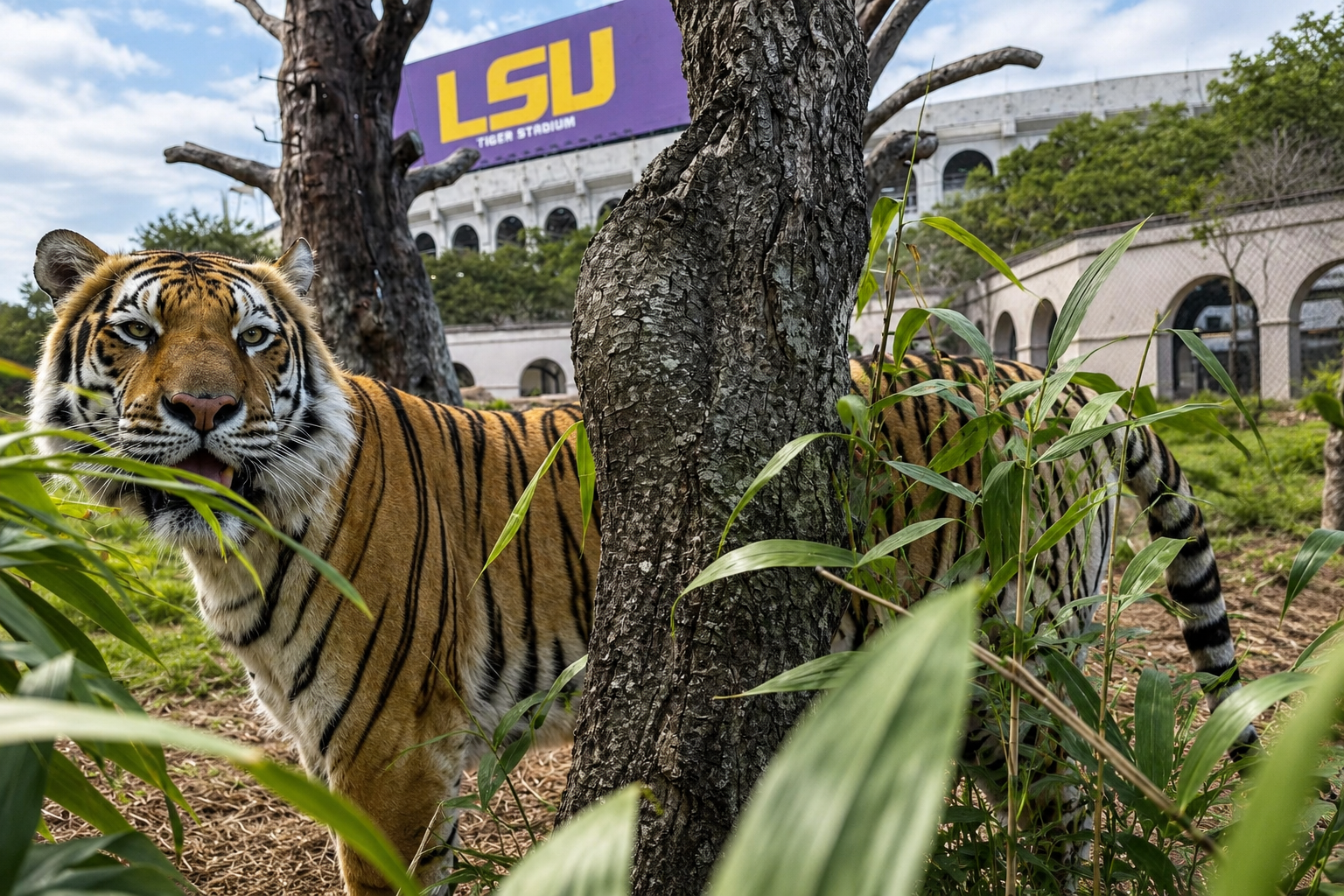
Most people who ask this question are expecting a simple answer. Tigers are fierce. Tigers are fast. A college football program wants to sound intimidating, so it picks a tiger. Reasonable enough.
The actual answer is more interesting than that, and significantly more complicated.
LSU did not become the Tigers because someone in a boardroom decided it sounded tough. The nickname traces back to the American Civil War, to a group of Louisiana soldiers who earned a reputation so ferocious on the battlefield that even fellow Confederate troops were reportedly reluctant to fight alongside them.
Understanding that history is the only way to understand why a university in Baton Rouge has had a live Bengal tiger on its campus for nearly ninety years.
The story starts not in Baton Rouge but in New Orleans, where a unit called the Tiger Rifles was formed in the early days of the war.
That unit became the seed of what grew into a broader nickname for Louisiana soldiers fighting in the Army of Northern Virginia under Robert E. Lee. Historians Terry L. Jones and Scott L.
Mingus have both written about the Louisiana Tigers as fighters defined by aggression and a barely controlled wildness that made them effective in battle and difficult to manage off it.
They were not celebrated for their discipline. They were celebrated for their ferocity.
That reputation survived the war and lingered in Louisiana’s cultural memory for decades. When Dr. Charles Coates, an LSU administrator who served the university from 1893 to 1939, wrote about the origins of the team nickname in a 1937 alumni newsletter, he traced it directly to that Civil War heritage.
He wrote that he found the name appropriate because the original Louisiana Tigers were known for getting into the hardest and most dangerous work.
LSU itself confirmed the connection publicly in 2017, when an online petition questioning the mascot’s origins prompted the university to acknowledge that the Tigers nickname had been adopted “based on lore about the battlefield ferociousness of a Louisiana regiment operating in Northern Virginia.“
That acknowledgment surprised a lot of people, including many LSU fans who had simply assumed the tiger was chosen because it sounded intimidating or because it fit neatly with the Bengal tiger that eventually arrived on campus.
The reality is that the Civil War connection came first, and everything else built on top of it.
How a Perfect Football Season Made the Name Official
The nickname moved from military lore to sporting identity in the fall of 1896, when LSU’s football team under coach A.W. Jeardeau completed a perfect 6-0 season.
That team adopted the Tigers name, and from that point forward it was permanent. The timing was not entirely coincidental.
Most college programs in that era named their teams after fierce animals, and the tiger fit both the broader trend and the specific history that Louisiana already associated with the name.
The “Fighting Tigers” version of the nickname gained even wider traction in 1955 with the emergence of what became known as the Fourth-Quarter Ball Club, a defense that made LSU one of the most feared teams in the country.
The name stuck through every era of LSU football that followed, through national championships and Heisman winners and the kinds of Saturday nights in Tiger Stadium that made the place one of the most intimidating venues in college sports.
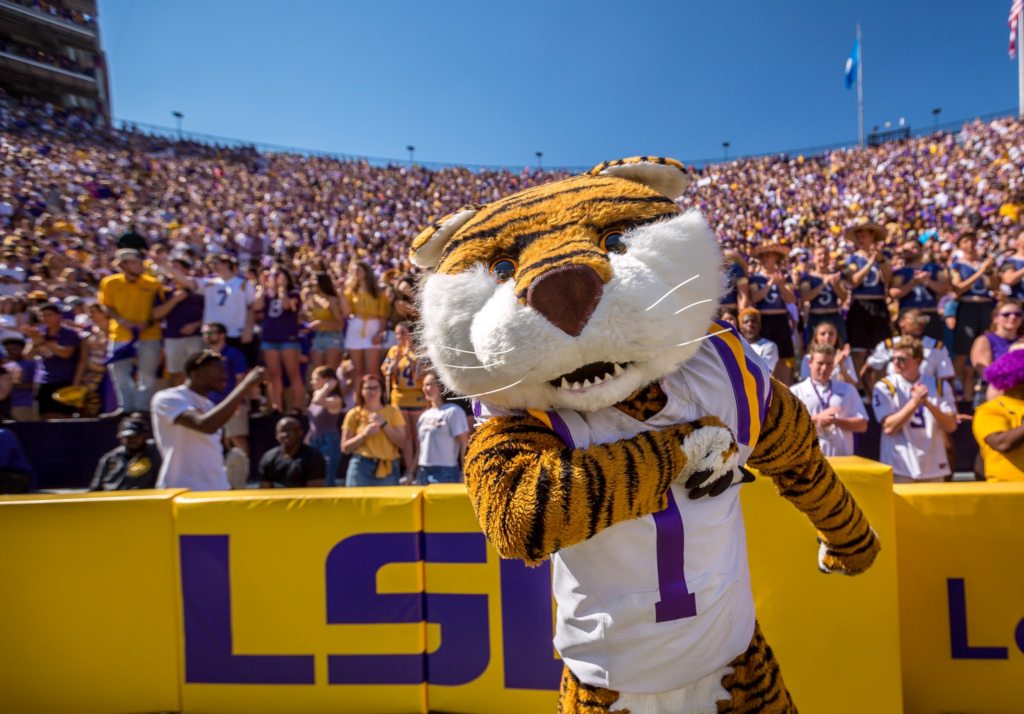
Today twelve Division I programs go by the nickname Tigers. None of them carry the same depth of historical context that LSU does.
The name at most schools is exactly what it looks like on the surface: a choice made because tigers are powerful.
At LSU, it is a thread that runs from a New Orleans military unit in the 1860s through a perfect football season in the 1890s and all the way to the present day.
The $750 That Brought a Real Tiger to Campus
The decision to add a live tiger to the equation came much later, and it started with a fundraising drive that sounds almost impossibly modest given what it produced.
In 1935, a group that included Athletic Department trainer Chelsis “Mike” Chambers, athletic director T.P. Heard, swimming pool manager William G. Higginbotham, and LSU law student Ed Laborde launched a campaign to bring a real Bengal tiger to campus.
Their method was to collect 25 cents from each student until they had enough money. They raised $750 in total, which was enough to purchase a one-year-old, 200-pound Bengal tiger named Sheik from the Little Rock Zoo in Arkansas.
Sheik arrived in Baton Rouge by train and was renamed Mike, in honor of Chambers, the trainer whose idea it had largely been. Mike I made his first appearance at Tiger Stadium on November 21, 1936, and what had been a nickname was now something a crowd could actually see and hear.
Mike I served for twenty years, the longest tenure of any tiger to hold the role. During that time he was at the center of one of the stranger episodes in college football rivalry history.
Before a game against Tulane, Mike I was kidnapped by Tulane fans, cage and all, and later found abandoned in New Orleans with his cage painted Tulane green.
He came back to Baton Rouge, LSU played the game, and the highly favored Tulane team barely managed a 14-14 tie. It is remembered in Baton Rouge as proof that you do not mess with the mascot.
Mike I died on June 29, 1956. His body was preserved and can still be seen at the Louisiana Museum of Natural History on the LSU campus.
The tradition has continued through seven tigers in total, each one named Mike in honor of the original.
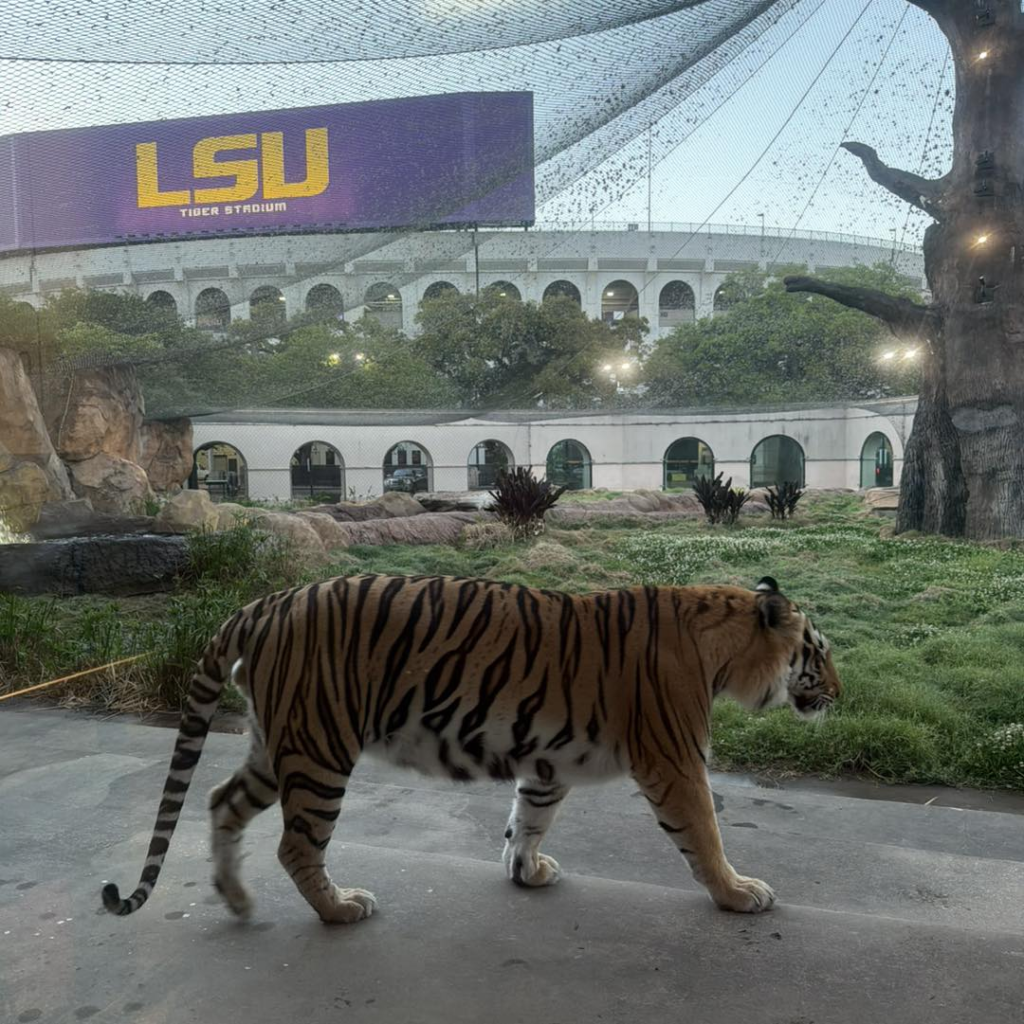
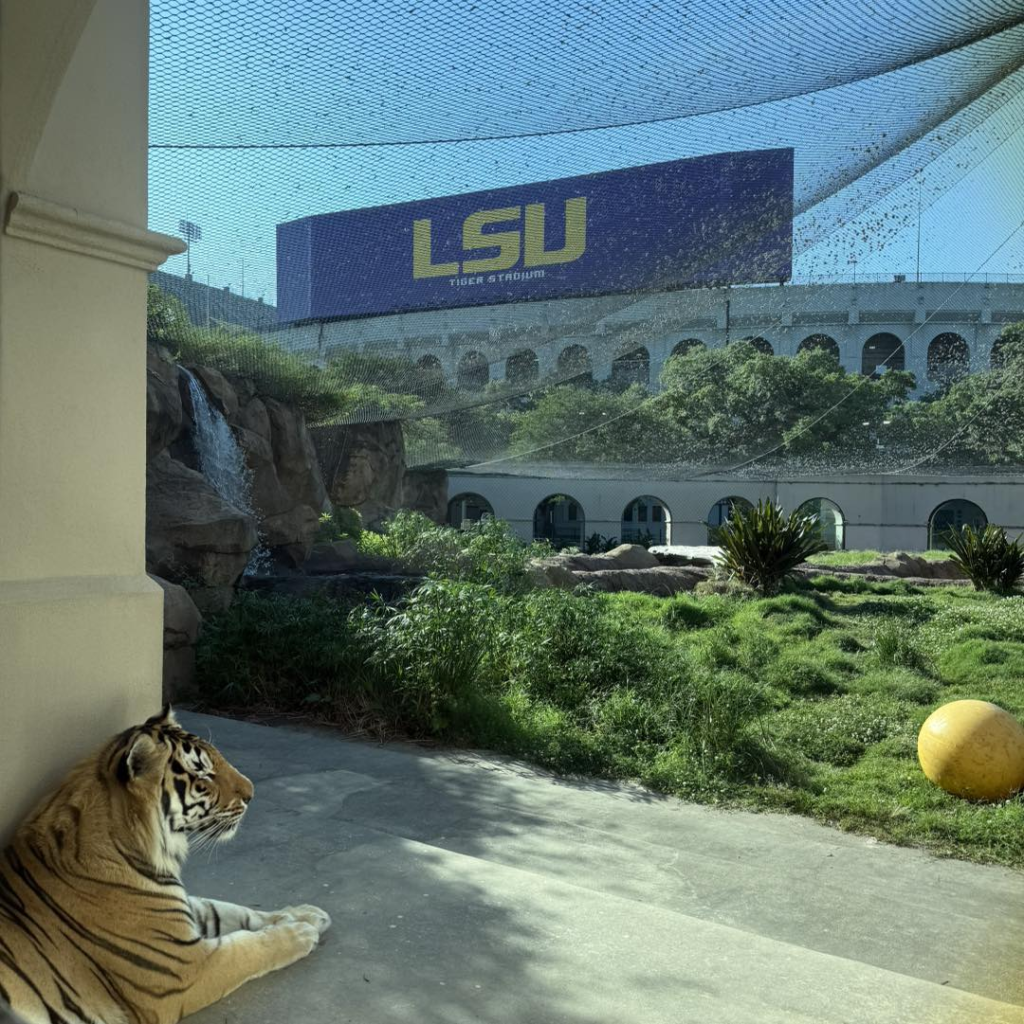
Mike VII, the current live mascot, lives in a naturalistic habitat directly across from Tiger Stadium. He has, notably, never actually been inside Tiger Stadium, a departure from the earlier tradition of parading the tiger through the stadium before games.
Before home games, the team bus drives past Mike’s enclosure on the way into the stadium. The legend holds that LSU scores a touchdown for every growl Mike lets out as the bus rolls by.
Whether that part is true is a matter of faith, not record. What is documented is that a nickname born from Civil War soldiers, confirmed by a 1930s administrator and cemented by a 6-0 football season, eventually grew into one of the most recognizable mascot traditions in all of American sport.
The tiger was never really about the animal. It was about what Louisiana decided the animal represented, and what a particular group of soldiers from New Orleans made people believe that was.
Read More: Alabama’s transfer portal haul shaping early expectations for 2026 season
