

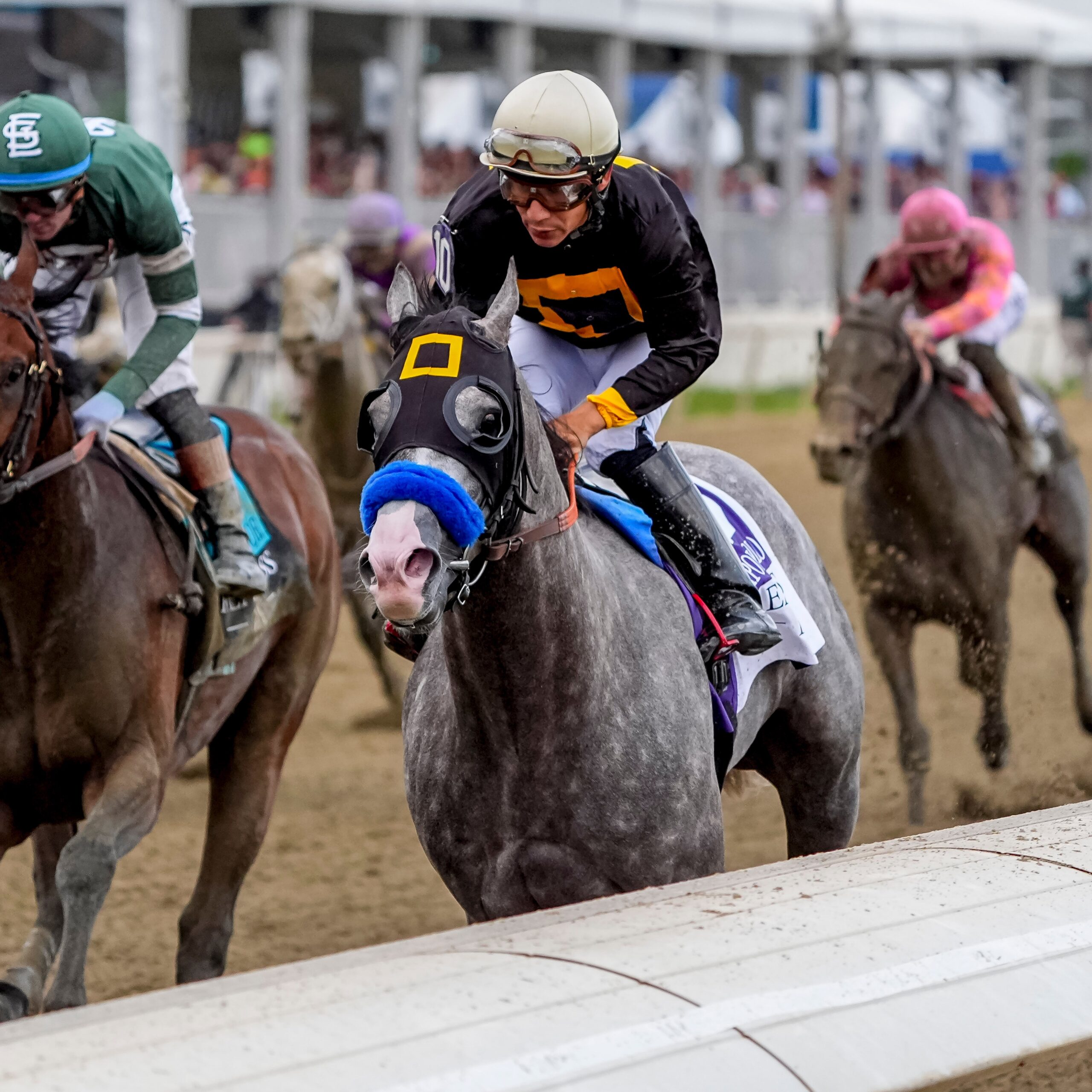
Napoleon Solo won the 151st Preakness Stakes on Saturday night. He overcame 10-1 odds, passed the favored Taj Mahal on the far turn, held off a late charge from Iron Honor and gave trainer Chad Summers the biggest moment of his career.
It was a genuine upset and a good race. Nobody is taking that away from him. But buried underneath the celebration is a number that deserves a closer look.
The winning time was 1:58.69. That is the slowest a horse has won the Preakness Stakes in 75 years. The last time the race finished slower than that, Harry Truman was in the White House.
For a race that has produced some of the fastest clockings in American thoroughbred history, Saturday night’s running was, by the standards of the Preakness, historically sluggish.
And the most obvious explanation for it is the one that nobody wants to say too loudly the morning after. Laurel Park is not Pimlico.
What the Fractions Said That the Winner’s Photo Did Not
Horse racing people talk about fractions the way baseball people talk about exit velocity. They tell you what actually happened underneath the result. Saturday’s fractions at Laurel told a very specific story.
Napoleon Solo and Taj Mahal went through the first quarter mile in 22.66 seconds, which is not slow for a 14-horse field. The half was reached in 44.66. Respectable. Then the race stalled.
The third quarter was covered in 25.42 seconds. The fourth in 26.47. Those numbers represent a significant deceleration through the middle sections of the race, the kind that happens when horses are working harder than the time suggests, when the ground is taking something from them that does not show up until late.
The final three-sixteenth mile was run in 20.14, which looks fast in isolation but is simply the field emptying whatever was left in the tank once the corner was turned.
Before the race, one industry analyst predicted with confidence that Laurel Park’s configuration at a mile and three-sixteenths would probably produce a track record.
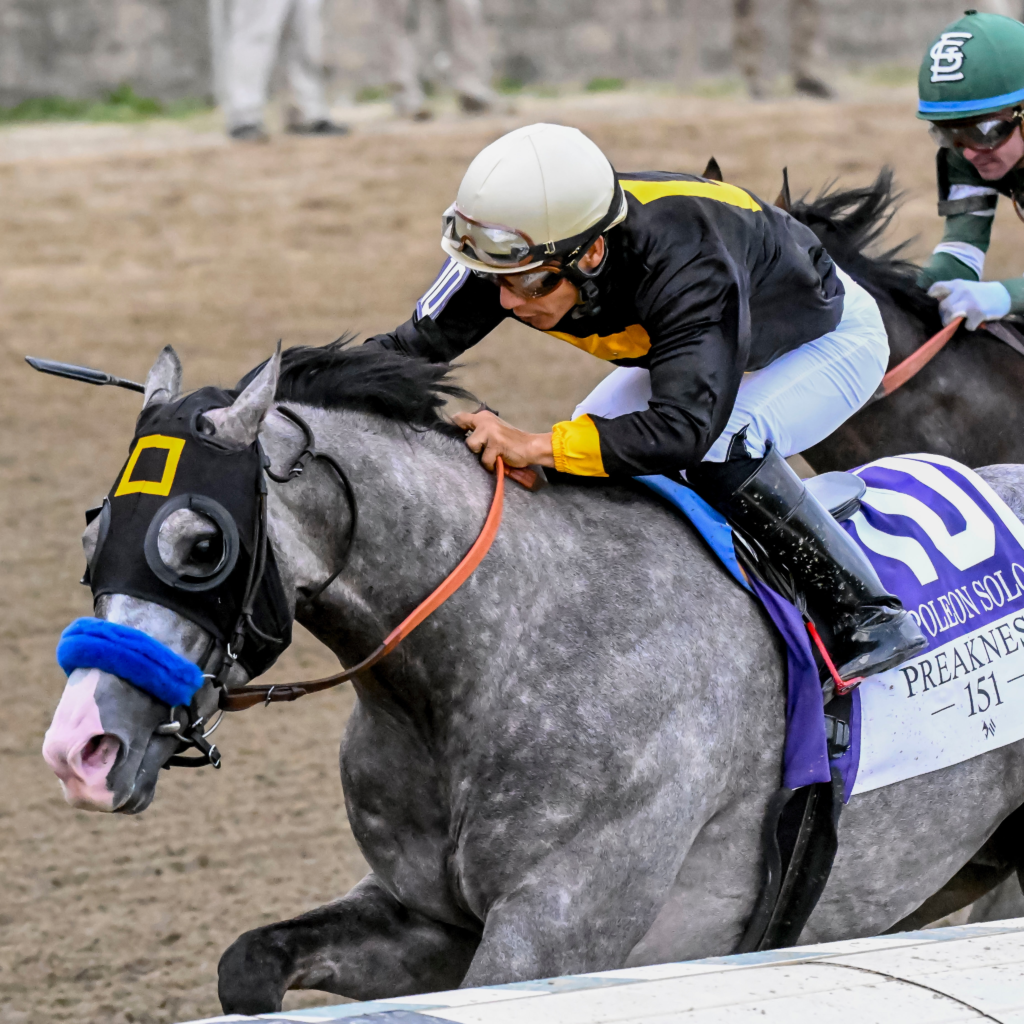
The course record at that distance at Laurel, set during a 2000 Maryland Million Classic, sat at 1:54.51. Napoleon Solo crossed the wire more than four seconds slower than that.
At Pimlico, the Preakness record stands at 1:53.0, set in 2010. Saturday’s winning time would not have broken a single notable benchmark at the old home of this race.
It would have been, at Pimlico, a performance that raised a few eyebrows. At Laurel, on a warm May evening with ideal weather conditions and a full 14-horse field, it ended up in the record books for the wrong reason.
Track configuration matters more than most casual fans understand. Pimlico’s main track is wider, its turns are shaped differently, and generations of horses have run their best on its surface.
Laurel Park is a fine racetrack. It hosts quality racing throughout the year and its surface held up well under the additional pressure of a major stakes card on Saturday.
But for the Preakness specifically, the venue change appears to have produced a measurably different race than what the sport is used to seeing.
What This Means Before Pimlico Comes Back in 2027
The Preakness moved to Laurel as a temporary measure while Pimlico undergoes a $400 million renovation.
The plan is for the race to return to its ancestral home in 2027, and there is no suggestion that Laurel was anything other than an emergency solution to a real logistical problem.
The Maryland Jockey Club handled the situation professionally. The card was well-run, the crowd was manageable and the racing itself was competitive throughout the day.
But the slow final time is a data point that racing officials will need to reckon with honestly. Taj Mahal, the only horse in the field who had previously raced at Laurel Park and who was coming off a dominant eight and a quarter length victory over that exact surface in the Federico Tesio Stakes, finished tenth on Saturday.
More than thirteen lengths behind the winner. That result from the one horse with genuine familiarity with the venue is not nothing.
What does it mean going forward? If Pimlico opens on schedule for 2027, Saturday’s slow time becomes a footnote, a one-year anomaly produced by extraordinary circumstances.
The race gets back to its home, speeds normalize, and this edition of the Preakness is remembered mostly for Napoleon Solo’s improbable victory and the novelty of a new venue.
But if there are delays to the Pimlico renovation, if the 2027 Preakness is also run at Laurel, the conversation about what the track does to times and to horses becomes significantly more serious.
The 2026 renewal handed officials exactly one season’s worth of data. One data point is not a pattern. Two would be.
Napoleon Solo deserved to win on Saturday. He ran the race his trainer designed for him, his jockey executed it perfectly and he was the best horse in the field on the night.
None of that changes the number on the clock, and none of it answers the question that number is quietly asking about the track he ran it on.
